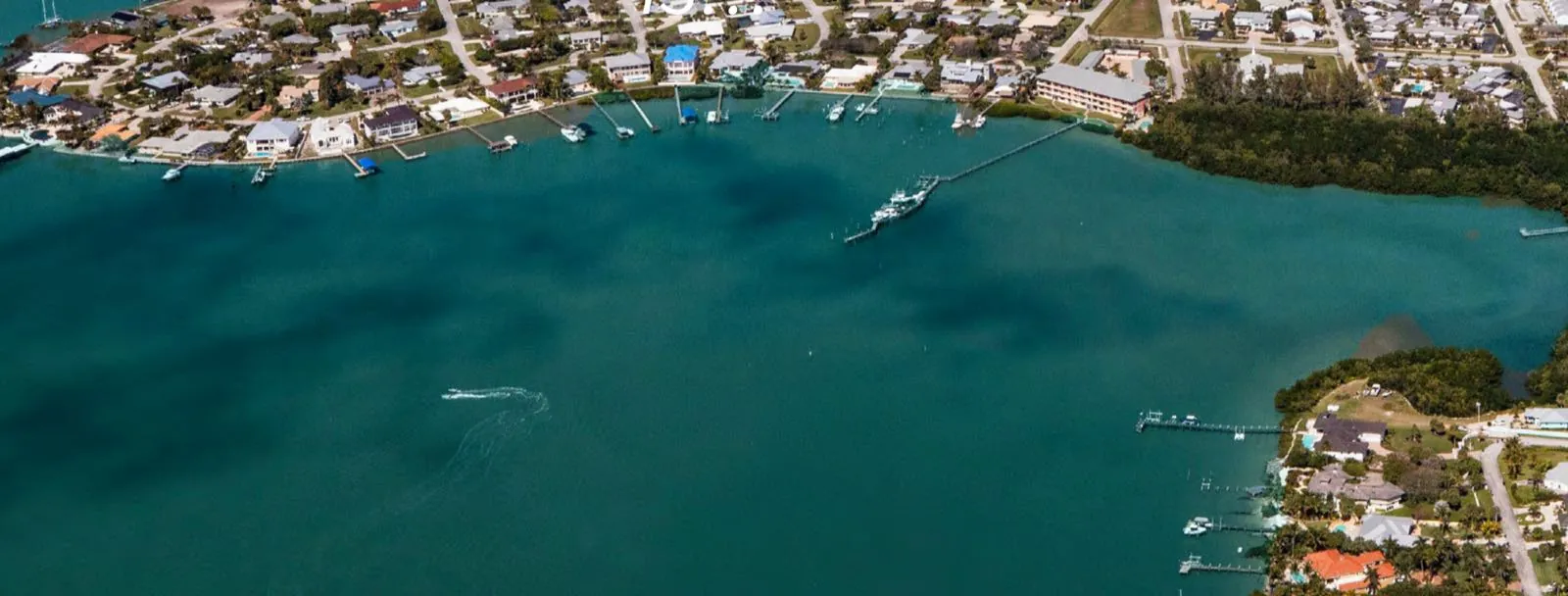
When Cape Coral was first developed, the land was master-planned into individual lots, and many of those lots are still vacant. On paper, building on one looks simple: buy the lot, pick a plan, pull a permit. In practice, a few things about the lot itself can change your budget and timeline a great deal. Here is what to check first, in plain language, before you buy or break ground.
Start With the Lot’s Records
Look up the lot on the Lee County Property Appraiser website by address or parcel (STRAP) number. Confirm the owner, legal description, lot size and zoning. Then check two more things.
Assessments on the tax bill. In Cape Coral, utility expansion assessments are billed annually on the property tax bill. The City notes that amortized assessments generally stay with the property when it is sold, and lenders may require them to be paid in full. The City’s website has an “Assessments & Payoffs” lookup.
Recorded restrictions. Don’t assume a lot is free of an HOA or deed restrictions, or that it has them. A title search will show what is recorded against the property.
Utilities: City Water and Sewer, or Well and Septic?
This can be one of the biggest unknowns on a Cape Coral lot.
The Utilities Extension Project (UEP)
The City’s Utilities Extension Project extends City water, sewer and irrigation to areas that still rely on private wells and septic tanks. According to the City, utilities now reach nearly all of Cape Coral south of Pine Island Road, and work is moving north. At the time of writing, the City lists North 1 as under construction, North 3 in design, and North 5 and North 6 in the study phase.
UEP work is paid for through assessments on the properties that benefit. Owners can prepay or spread payments over time, and amortized payments carry interest. Costs vary by project. As one example, the Cape Coral Breeze reported in 2023 that a standard 10,000-square-foot residential parcel in North 1 West faced $33,367 in assessments and capacity charges if paid in full during the first payment window. That figure did not include the cost of connecting the house.
What it means for a new home
The City’s rule is direct: undeveloped parcels must connect to City water and sewer before a Certificate of Occupancy is issued. If your lot is in an upcoming UEP area where lines are not yet in service, you’ll sign a Hold Harmless Utility Connection Agreement. That leaves two options.
Wait for City utilities. The City may delay your Certificate of Occupancy until the system is installed and working.
Install a well and septic system now. Once City service arrives, you’ll still need to connect, pay the associated fees, and properly close and abandon the septic tank.
Connection also carries smaller fees. The City’s UEP FAQ lists a $310 meter installation fee, a $225 residential utility deposit (which may be waived after a credit check), and a $100 septic abandonment permit fee. These are subject to change. For UEP questions, the City’s line is 1-833-227-3837.
Flood Zone and Elevation
Look up your lot on the City’s Forerunner flood portal. It shows the flood zone, the Base Flood Elevation (BFE) and the Design Flood Elevation for the property. The current FEMA flood maps for Cape Coral took effect on November 17, 2022.
If the lot is in a flood zone beginning with A or V, the City’s residential plan review guideline requires the lowest floor of living areas to be at least 1 foot above the BFE. That extra foot is the freeboard required by the Florida Building Code. Equipment that serves the house, such as water heaters and A/C units, must meet the same elevation.
Enclosed areas below that level, such as garages, need flood vents. They can only be used for parking, building access or storage. The City also requires an “Under Construction” Elevation Certificate after the floor slab inspection and before the tie beam inspection, plus a final certificate at the end.
V zones carry extra requirements. The required elevation drives fill, foundation design and cost, so confirm it early.
Soil, Fill, Drainage and Wildlife
Fill and drainage
Raising a building pad to meet flood elevation often involves fill, but there are limits. In Special Flood Hazard Areas, the City’s guideline allows a maximum of 12 inches of fill under the foundation, with a maximum 4:1 slope. You’ll need a drainage plan showing existing and proposed grades, and clean, compacted fill under slabs (compaction tests may be required). A soil report is optional in A zones and mandatory in V zones with new pilings.
The City also limits impervious surfaces (roof, driveway, patios, walkways) to 60% of the lot in R-1 and RML zoning. You’ll need to submit a calculation sheet with your permit.
Burrowing owls and gopher tortoises
Burrowing owls and gopher tortoises are protected, and the City requires every new-home applicant to check for their burrows. Before permitting, you inspect the lot and nearby vacant lots and sign an affidavit. If burrows are found, the City requires roped-off buffers: 33 feet around owl burrows during nesting season (February 15 to July 10) or 10 feet outside it, and 25 feet around gopher tortoise burrows year-round. Some situations require state or federal permits before any work begins.
Canal Lots and Seawalls
Cape Coral has more than 400 miles of canals, and many connect to the Caloosahatchee River. A canal lot adds one more major item: the seawall.
A seawall needs its own permit, separate from the house. Under a City notice effective November 15, 2023, any new seawall, or any section being replaced, must meet the City’s Engineering Design Standards that took effect March 1, 2022. Except on freshwater canals, the City also requires state DEP approval or a federal general permit.
If the seawall isn’t built yet, the City has an affidavit that lets your home permit be processed while you wait for the seawall permit. It applies only when a vacant lot next door gives the seawall contractor access, and the home cannot be occupied until the seawall is finished and passes inspection. On a lot with an existing wall, have its condition checked before you buy.
How Cape Coral Building Permits Work
Cape Coral building permits are filed online through the City’s EnerGov Citizen Self-Service portal. Licensed contractors have filed online since 2024, and as of July 1, 2026, the City expects owner-builders to apply online too.
The City’s application checklist for a new single-family home includes construction plans, truss plans, window and door schedules, and a sealed survey less than one year old. It also calls for a site plan, a drainage plan, signed energy calculations, the burrowing owl/gopher tortoise affidavit and an impervious surface calculation.
Depending on the lot, you may also need a hold harmless agreement (active UEP areas), a septic permit receipt from the Health Department, or a seawall affidavit. A Notice of Commencement must be recorded and posted on the job site before the first inspection. A permit becomes void if the first inspection isn’t made within six months of issuance.
Your Pre-Purchase Checklist
Before you buy a lot or commit to a plan, check:
- Zoning, lot size and recorded restrictions
- UEP status and any assessments on the tax bill
- Flood zone, BFE and Design Flood Elevation
- Whether fill is needed and how much the site allows
- Signs of burrowing owls or gopher tortoises
- Seawall condition or permit needs (canal lots)
- A realistic budget for utility assessments, capacity charges and connection costs
A Realistic Order of Steps
- Review the property appraiser record, tax bill and title.
- Confirm flood zone and required elevation on Forerunner.
- Check UEP status and decide between City utilities and well/septic.
- Order a current survey and check for protected wildlife.
- Design a home that fits the setbacks, elevation and impervious limits.
- Permit and build the seawall first, if needed.
- Submit the building permit application.
- Build, pass inspections and submit elevation certificates.
- Connect utilities and receive the Certificate of Occupancy.
Rules and fees change, so confirm current requirements with the City of Cape Coral or a licensed professional before you buy or build.
Ready to Build on Your Lot?
Proudhouse Builders plans, designs and builds homes in Southwest Florida, and we can help you sort through these questions for your specific lot. Learn more on our services page, call us at (239) 321-0594, or reach out through our contact page. You bring the land, we do the rest.
Sources
- City of Cape Coral, Utilities Extension Project (UEP): capecoral.gov/uep/
- City of Cape Coral, UEP Frequently Asked Questions: capecoral.gov/uep/frequently_asked_questions.php
- Cape Coral Breeze, “North 1 UEP assessment to be most costly ever” (Jan. 19, 2023): capecoralbreeze.com/news/local-news/2023/01/19/north-1-uep-a…
- City of Cape Coral, Flood Protection: capecoral.gov/departments/development_services/building_divi…
- City of Cape Coral, Floodplain Management Update (effective 7/1/2020): capecoral.gov/Documents/Departments/Development%20Services/N…
- City of Cape Coral, Plan Review Guideline – New Construction Residential: capecoral.gov/Documents/Document%20Hub/Permit%20Document%20C…
- City of Cape Coral, One- or Two-Family Dwelling Building Permit Application packet: capecoral.gov/Documents/Document%20Hub/Permit%20Document%20C…
- City of Cape Coral, Notice to Industry: Seawalls (effective Nov. 15, 2023): capecoral.gov/Documents/Departments/Development%20Services/N…
- City of Cape Coral, Seawall Guideline – Residential: capecoral.gov/Documents/Document%20Hub/Permit%20Document%20C…
- City of Cape Coral, Boating: capecoral.gov/departments/parks_recreation/outdoor_recreatio…
- City of Cape Coral, EnerGov Citizen Self-Service (CSS): capecoral.gov/departments/development_services/permitting_se…
- City of Cape Coral, “City Transitioning to Online-First Permitting July 1” (June 12, 2026): capecoral.gov/news_detail_T4_R700.php
- Wikipedia, Cape Coral, Florida (history and master-planning into lots): en.wikipedia.org/wiki/Cape_Coral,_Florida
- Lee County Property Appraiser: leepa.org/
Own land in Southwest Florida?
Our team can tell you what your parcel can become. Call (239) 321-0594 or start a land review online.
Start a land review

